Curiosity magazine
Issue 3 · Wednesday, 11 November 2026
Anne L’Huillier’s work paved the way for attosecond physics
Anne L’Huillier’s work paved the way for investigating processes that are so rapid they were previously impossible to follow. In 1987, she and her colleagues focused infrared laser light through a noble gas. They found that it produced many different overtones of light. This phenomenon was high-order harmonic generation. High-order harmonics became her research focus for the next four decades. With attosecond pulses, scientists can study how electrons behave in materials. This could potentially reveal chemical bonds that can be selectively broken or formed. Such bonds could make new compounds that could be used in medicine. In 2023, Agostini, Krausz and L’Huillier were awarded the Nobel Prize in Physics for their experiments.
- attosecond pulses
- Extremely short pulses of light. They can be used to measure the rapid processes in which electrons move or change energy.
- high-order harmonic generation
- A phenomenon in which infrared laser light focused through a noble gas produces many different overtones of light. It was observed in 1987.
Short news
At light speed
Art
Vietnamese embroidery: a relatively little-known textile heritage
Vietnamese embroidery is described as a relatively little-known textile heritage outside Vietnam. In the late 19th and early 20th centuries, skilled embroiderers in villages across northern Vietnam produced richly decorated silk textiles for an expanding international market. From 6 November 2026, a new display at V&A East Storehouse brings together three embroidered textiles from the V&A collection, alongside a contemporary example of Vietnamese fashion. According to Les Arts Décoratifs au Tonkin (1922), around 1896 embroiderers began producing their work on Lyon satin. Their motifs were inspired by Chinese, Japanese and French designs. These embroidered textiles were exhibited at the Exposition Universelle in Paris in 1900, where they attracted attention and received awards. The sample book of the firm Nam-Quat was probably intended for customers to select designs and fabrics when ordering.
Science
How microbes could help secure the world’s critical minerals
The authors argue that biotechnology could become an important component of future critical-mineral supply chains. Bioleaching and biooxidation processes are already established for recovering copper, nickel, gold and cobalt from ores. They involve irrigating heaps of crushed ore or treating ground mineral powders with specialist microbes. These microbes generate chemicals, such as acids, that selectively dissolve either target metals or other minerals found with them. Biomolecules such as the protein lanmodulin can separate rare-earth elements. Yields reach 99.9% in one step. This works under conditions simpler than conventional techniques. It uses aqueous solutions rather than organic solvents. However, many promising approaches never progress beyond being validated in the laboratory. They often stall between proof-of-concept studies and commercial demonstration. The authors describe this as a challenge familiar throughout industrial biotechnology.
- bioleaching
- A process in which specialist microbes generate chemicals that selectively dissolve target metals from crushed ore or ground mineral powders.
Science
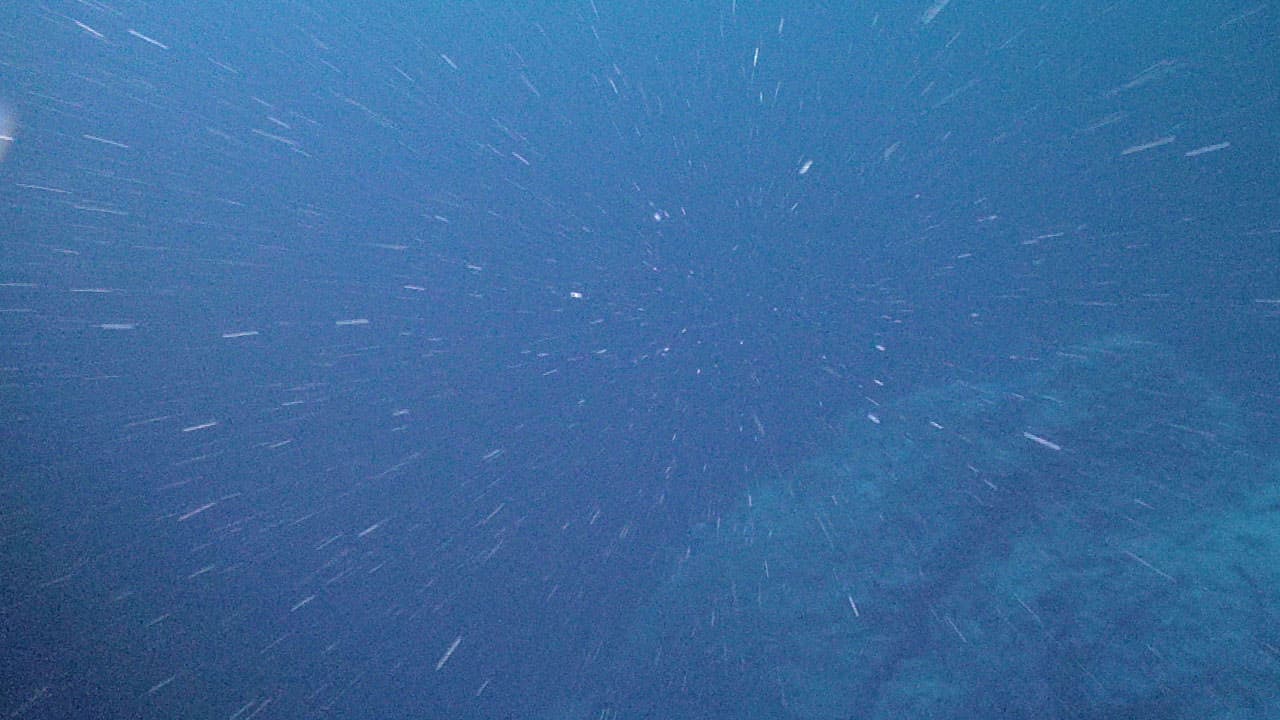
Stickier marine snow may deliver over six times more carbon to the deep ocean
Researchers estimate that marine snow removes more than 10 gigatons of carbon from surface waters each year. Only about two gigatons reach depths where that carbon can remain stored for hundreds or even thousands of years. Researchers from Scripps Institution of Oceanography and the University of Lincoln identified a surprisingly important factor. That factor is how sticky the marine snow is. Bacteria preferentially colonize areas near a particle’s surface where the material is less viscous. The denser, stickier regions deeper inside are much harder for bacteria to penetrate. In laboratory experiments, particles with greater viscosity resisted bacterial degradation and fragmentation for longer periods. Computer simulations further suggested that stickier particles can descend to greater depths before breaking apart. The team estimates that highly viscous marine snow can deliver more than six times as much carbon to the deep ocean as less viscous particles.
- confocal microscopy
- A method that uses light to capture detailed images at different depths within a sample. It allows its structure to be reconstructed in three dimensions.
From Kuazara
Today in the Lab
Light’s path through the air
Change the values yourself and watch the result live in the simulation.
Open the simulationSources
Every item in this issue comes from the sources below.
- Nobel Prize · Institutional releaseAnne L’Huillier’s work paved the way for attosecond physics
- V&A · Institutional releaseVietnamese embroidery: a relatively little-known textile heritage
- Nature · Peer-reviewed journalHow microbes could help secure the world’s critical minerals
- ScienceDaily · News roundupStickier marine snow may deliver over six times more carbon to the deep ocean
Image credits
- p. 2: Stickier marine snow may deliver over six times more carbon to the deep ocean · Image: NOAA National Ocean Service / Wikimedia Commons · Public domain · Original image
AI prepared this issue by compiling it from its sources; every sentence was compared with its source and passed automatic checks.
Question of the day
Puzzle corner
A probe is 1 light-day from Earth. After you send a radio command, when is the earliest reply?
- About 12 hours later
- About 1 day later
- Instantly, no delay
- About 2 days later
Yesterday’s answer
What does the ozone layer mainly protect us from?
B: Ultraviolet rays
Ozone in the stratosphere absorbs most of the Sun’s ultraviolet (UV) rays. UV can cause sunburn and DNA damage in living things.