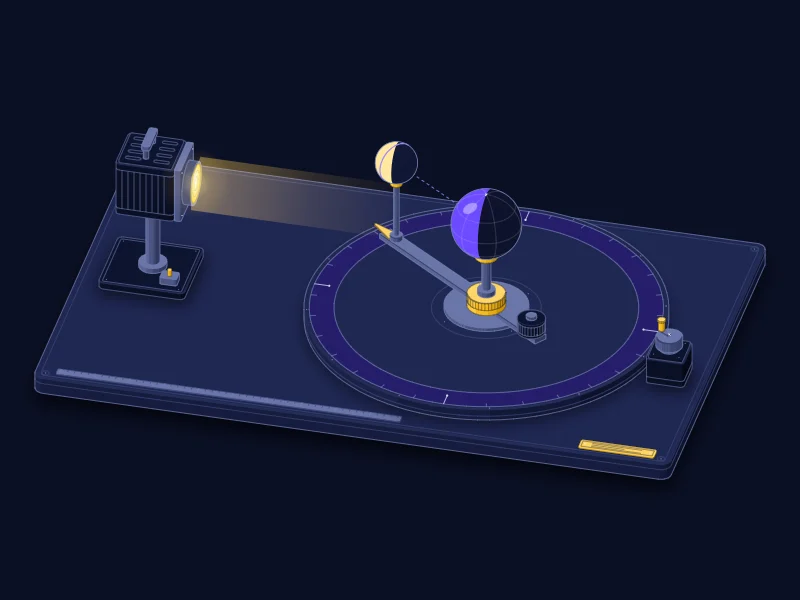
Phases of the Moon
Move the Moon around the Earth and see how much of its sunlit half we can see from here.
Rayleigh scattering simulation
Lower the lamp: air scatters blue light far more than red, giving a blue sky at noon and a red Sun at dusk.
In the learning section below the figure, predict, try, complete the tasks and check yourself with short questions.
Short path: blue scatters sideways and paints the sky; the rest of the beam stays nearly white.
As the Sun gets close to the horizon, what happens to the colour of the light reaching the observer directly?
Sun at 60 degrees. Light travels 1.15 times the overhead path through the air. 78 percent of the blue and 96 percent of the red reach the observer.
Move the Moon around the Earth and see how much of its sunlit half we can see from here.
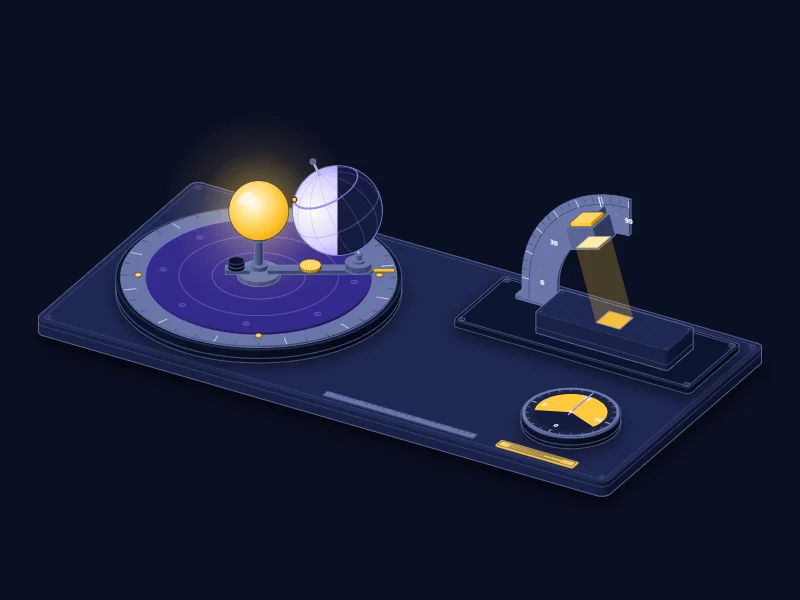
Change the date and the latitude: how does the axial tilt change the angle of sunlight and the length of the day?
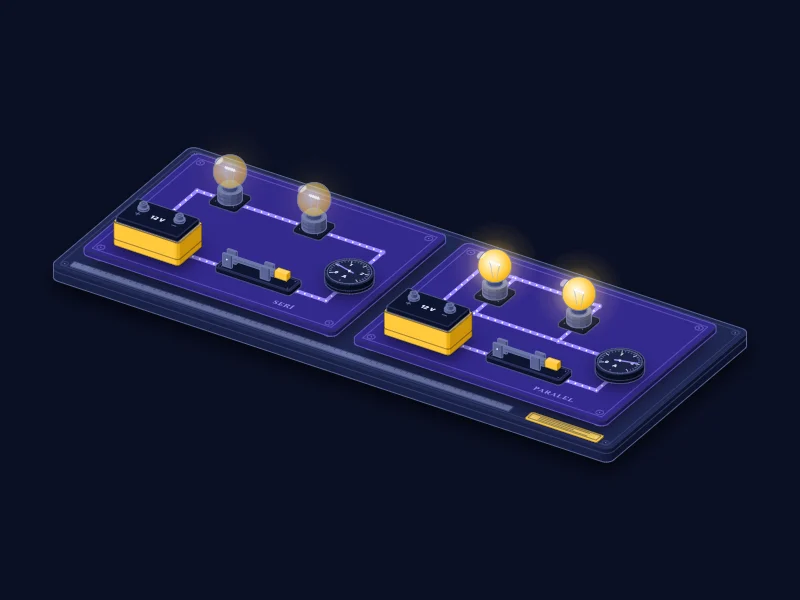
The same bulbs on two boards: close a switch, remove a bulb and measure how the current changes in series and parallel.
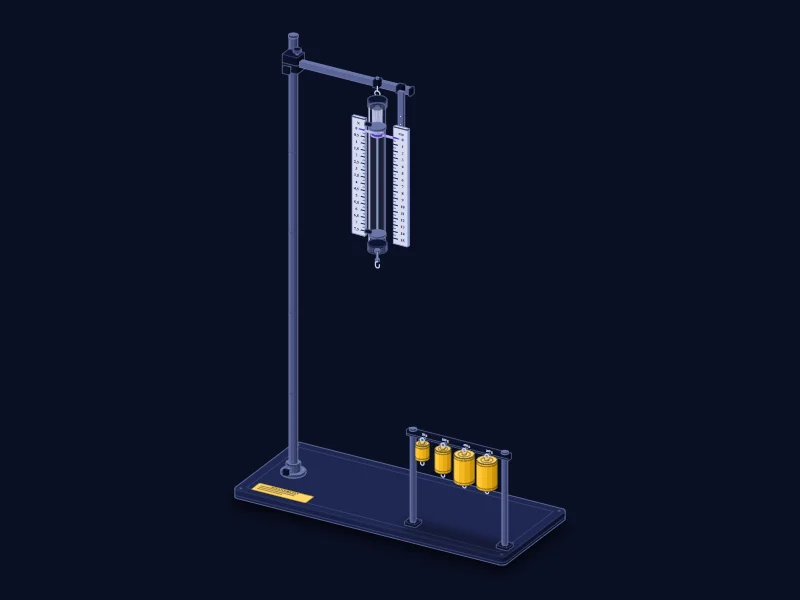
Hang masses on the hook, read how far the spring stretches and how many newtons it shows; compare three springs.