
Curiosity magazine
Issue 2 · Tuesday, 10 November 2026
Science
Perseverance’s laser reveals corundum luminescence in a Mars rock
Image: NASA/JPL-Caltech · Public domain
SuperCam found strong, narrow luminescence peaks at 692.7 and 694.1 nanometers in a light-colored rock hit by its laser. The team was startled. SuperCam can time the delay of atomic transitions, so the team could verify the emission came from chromium in corundum. Collectable rubies have not been found on Mars yet. Still, small corundum crystals help the team learn about Mars' past. Corundum is metamorphic and pegmatitic, so it would not be expected on Mars, which lacks plate tectonics.
Why it matters
Large meteor and asteroid impacts can create local metamorphism through long-term heating. The little corundum crystals may therefore offer clues to impact effects in Mars' past.
Short news
At light speed
Science
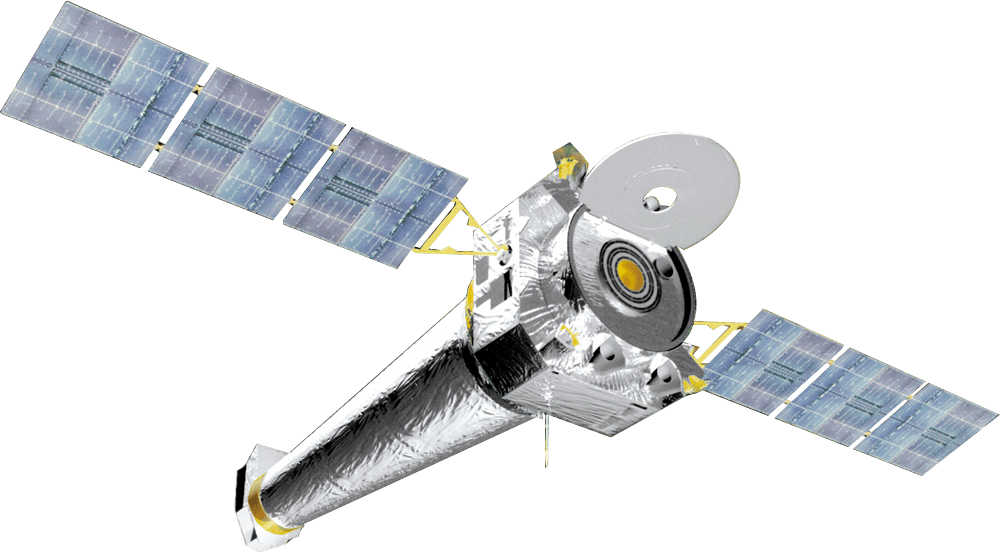
Chandra data point to a hidden companion behind a star’s 113-day outbursts
Data from the Chandra X-ray Observatory point to a hidden companion behind repeated outbursts from a giant, unstable star. The star is called AT 2016blu. It lies in the spiral galaxy NGC 4559, about 30 million light-years from Earth. Astronomers estimate its mass is at least 33 times that of the Sun. Between 2012 and 2026, they detected at least 27 bursts of optical light roughly every 113 days. A new study describes a previously hidden companion object that keeps pulling material from the star every 113 days. This partner is either a stellar-mass black hole or a neutron star. Chandra data from March 2026 showed the star was at least 100 times brighter in X-rays than in data from 2001 to 2002, before the outbursts began. The best explanation is that material from the star falls onto a neutron star or black hole during the closest approach in their oval-shaped orbit.
- neutron star
- A neutron star is the dense collapsed core of a massive star. In this story it is one of two possible identities for the hidden companion object.
- optical light
- Optical light is light in wavelengths that are visible to our eyes. In this story, the star's repeated bursts were detected in this kind of light.
Science
Crew emerges after a year in NASA’s simulated Mars habitat
On 31 October, four engineers emerged from a 158-square-metre, 3D-printed habitat at NASA’s Johnson Space Center in Houston, Texas. They had spent just more than a year inside for a simulated mission on the red planet. The exercise was the second in a series of extended NASA simulations. The series aims to test how long-duration space missions affect astronauts' health and performance. The crew grew their own crops, conducted science experiments and performed Marswalks on a model of the planet’s surface outside the habitat. Messages between the crew and mission control took 13 to 22 minutes to arrive, varying with the distance between Earth and Mars. The crew also dealt with a planned two-week communication blackout. NASA says the lessons will help it understand how isolation and limited resources affect astronauts' well-being and productivity.
- Marswalks
- Marswalks are activities the crew performed on a model of the planet's surface outside their habitat. In this story they are part of the simulated mission.
Science
Four volunteers finish 378-day simulated Mars mission
Four research volunteers stepped out of NASA’s Mars Dune Alpha habitat on Oct. 31. This ended the agency’s second yearlong Mars surface simulation. The crew spent 378 days without windows, the sounds of the outside world, or real-time calls with family and friends. The volunteers had entered the roughly 1,700-square-foot, 3D-printed habitat at Johnson Space Center in Houston on Oct. 19, 2025. The mission was called CHAPEA (Crew Health and Performance Exploration Analog) Mission 2. The crew took part in simulated Marswalks, robotic operations, habitat maintenance, exercise, and crop cultivation. They collected health and performance data. The work ran with limited resources and communication delays of up to 22 minutes each way. Two weeks of post-mission evaluations and debriefs will help researchers interpret the data alongside the crew’s experiences. The study builds on the first CHAPEA mission, which concluded July 6, 2024.
Art
Son Lux music video premieres as a 17-minute installation at MASS MoCA
Son Lux’s new music video premiered last month at MASS MoCA. The piece is a joint commission by the museum and Pioneer Works. It was made in collaboration with Alex Cook. The work was shown as an immersive, 17-minute installation. It is titled “Out Into Us (Slow Down)” and complements the release of the band’s ninth studio album. In this multimedia work, the artists leaned toward deeply felt human experiences, like how long it can take to do or understand something. The video portrays a multigenerational family seated around a table and passing the time together. Scenes of a giant dust cloud take viewers back at least a century. These scenes evoke the Dust Bowl.
- Hudson River School
- A tradition of idealized landscape pictures. The source describes this type of image as historical propaganda that helped entice homesteaders to the plains.
Science
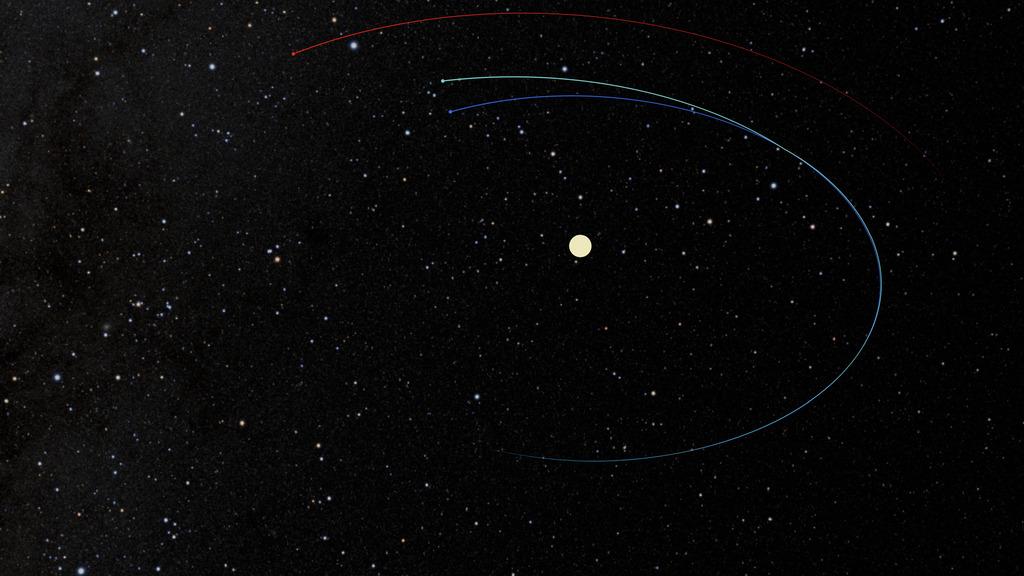
ESCAPADE spacecraft complete powered Earth flybys on the way to Mars
NASA’s two ESCAPADE spacecraft have each completed a powered Earth flyby. They used Earth’s gravity together with a sustained engine burn to slingshot toward Mars. The spacecraft launched from Cape Canaveral Space Force Station in Florida on Nov. 13, 2025. At that time, Earth and Mars were on opposite sides of the Sun. The first spacecraft passed about 1,000 miles above the planet’s surface. The second spacecraft followed two days later, at about 650 miles above the surface. Both spacecraft are now on course for a 10-month cruise to Mars. Their Mars orbit insertion burns are planned for Sept. 7 and Sept. 9, 2027. Once in orbit, the two spacecraft will fly in formation. They will study how the solar wind, a stream of material flowing from the Sun, interacts with the Martian environment. They will also study how that drives atmospheric loss at Mars.
Science
The 2026 ozone hole ranked seventh largest by area but was less deep
The Antarctic ozone hole of 2026 ranked seventh largest by area. The comparison rests on 48 years of monitoring. The hole was not as deep as other large holes on record. An unusually strong Antarctic polar vortex formed that year. It created ideal conditions for ozone depletion over a large area. Scientists use the word hole as a metaphor. It describes the area in which ozone concentrations drop below the historical threshold of 220 Dobson Units. With this metaphor, they can describe the hole’s area and depth. Records in depth and area have never occurred in the same year. The largest ozone hole occurred in 2006. The long-term trend in both characteristics is consistent. Scientists estimate that the Antarctic ozone layer will return to 1980 levels in the 2070s. That figure is an estimate, not a measurement.
- stratospheric ozone layer
- An atmospheric layer that protects life on Earth by absorbing ultraviolet light. Ultraviolet light damages DNA in plants and animals.
- Dobson Unit
- A unit for expressing ozone concentration. Scientists treat values below 220 Dobson Units as the historical threshold for defining the area of the ozone hole.
Short news
At light speed (continued)
Science
Einstein’s equations suggest gravity could break and reconnect
Researchers examined Einstein’s equations from a different mathematical perspective. They identified a similarity between gravity and electrically charged gases known as plasmas. Their work suggests that gravitational fields can undergo a process in which their underlying structures break and reconnect. This could allow energy to flow from gravity into matter, according to the work. The phenomenon is known as gravitational reconnection. It bears an unexpected resemblance to a process responsible for some of the Sun’s most powerful eruptions. In this mathematical description, gravity is represented by sheets rather than individual field lines. Just as magnetic field lines can change their connections and release energy, these gravitational sheets can also rearrange their connections under the appropriate conditions. The sheets are only mathematical representations. They are not physical surfaces that literally tear apart.
Culture
Khuwy’s tomb blocks carry one of the earliest known autobiographies
One of the world’s earliest known autobiographies was written on the walls of the tomb of an Egyptian dignitary named Khuwy. Most of the upper structure built atop the tomb has not survived. Archaeologists did find inscribed blocks that once lined its walls. On these, Khuwy described his life and achievements. He boasts of his moral integrity and says he never took anything from any man. The passage is incomplete and not entirely legible. It implies that Khuwy may have had a close relationship with the royal couple. The tomb dates to around 2400 B.C. and is one of the oldest underground decorated burial apartments.
“I never took anything from any man.”
Today in numbers
In numbers
at least33times
Astronomers estimate its mass is at least 33 times that of the Sun.
378 days
The crew spent 378 days without windows, the sounds of the outside world, or real-time calls with family and friends.
about 1,000 miles
The first spacecraft passed about 1,000 miles above the planet’s surface.
48 years
The comparison rests on 48 years of monitoring.
Question of the day
Puzzle corner
What does the ozone layer mainly protect us from?
- Meteorites
- Ultraviolet rays
- Infrared heat
Answer from the last issue (3 November 2026)
What is a Turing machine?
B: A theoretical model of computation
In 1936 Alan Turing described an abstract machine that reads and writes symbols on a tape. Anything computable is thought to be doable by such a machine.